
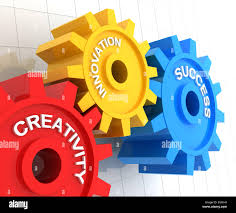
From the bustling accelerators of Shoreditch to the “Silicon Fen” in Cambridge, a familiar scene plays out across the UK startup landscape: a founder pitches a concept that is undeniably brilliant, quintessentially British in its ingenuity, and entirely “never-been-done-before.” We have a long, proud history of the “lone inventor” and the “boffin in a shed,” but therein lies the trap. We often mistake a clever invention for a successful innovation.
At Innovate by Enle, we see founders hit a wall because they’ve conflated these two terms. They treat “creativity” and “innovation” as synonyms, leading to “cool” products that no one buys and “disruptive” ideas that never leave the sketchbook.
If you want to build a company that doesn’t just start in the UK but scales globally, you need to understand the fundamental friction between the two.
1. Creativity is the Seed; Innovation is the Harvest
Creativity is the ability to conceive of something new. It is the raw, unbridled act of imagination. In a vacuum, creativity is free, it doesn’t require a business model, a target demographic, or a supply chain.
Innovation, however, is creativity with a job to do. Innovation is the process of taking those creative sparks and turning them into a product or service that creates measurable value. If creativity is about “the new,” innovation is about “the useful.”
2. The Formula for Success
Founders often get caught in the “Creativity Trap”, believing that the genius of the idea is 90% of the work. In reality, the math looks more like this:
Innovation = Creativity X Execution X Market Resonance
If any of those variables is zero, your total innovation score is zero. You can have the most creative idea in the world, but if you cannot execute it or if the market doesn’t actually need it, you haven’t innovated; you’ve simply had a very expensive daydream.
3. Why Founders Get It Wrong: Novelty vs. Utility
The mistake usually stems from a focus on novelty over utility. Many founders are “solution-led” rather than “problem-led.”
- The Creative Founder asks: “What is a cool thing I can build that doesn’t exist yet?”
- The Innovative Founder asks: “What is a specific friction point in my customer’s life, and how can I solve it in a way that is viable and scalable?”
Innovation requires a level of discipline that creativity often finds boring. It involves testing, iterating, failing, and most importantly discarding creative ideas that don’t solve the problem.
4. Bridging the Gap: From Idea to Impact
To move from being a creative visionary to an innovative leader, you must embrace three things:
- Constraint: Creativity hates rules, but innovation thrives on them. Budget, time, and technical limits force you to refine your creative ideas into something practical.
- Validation: Innovation requires an external feedback loop. A creative person can paint a masterpiece in a basement and it’s still art. An innovator who builds in a basement without user feedback is just making a hobby.
- Scalability: Can this creative solution be repeated 10,000 times? If not, it’s a craft, not a scalable innovation.
The Reality Check: The UK is world-class at creativity (the “starting”). To be world-class at innovation (the “scaling”), we must fall in love with the problem, not our own creative solution.
The Bottom Line
Don’t stop being creative, your “What Ifs” are the lifeblood of your company. But remember that your job as a founder isn’t just to think of new things; it’s to make new things work. Creativity is the spark, but innovation is the engine. Make sure you’re building both.
SUGGESTED READ: How to Ask Better Questions During User Interviews