
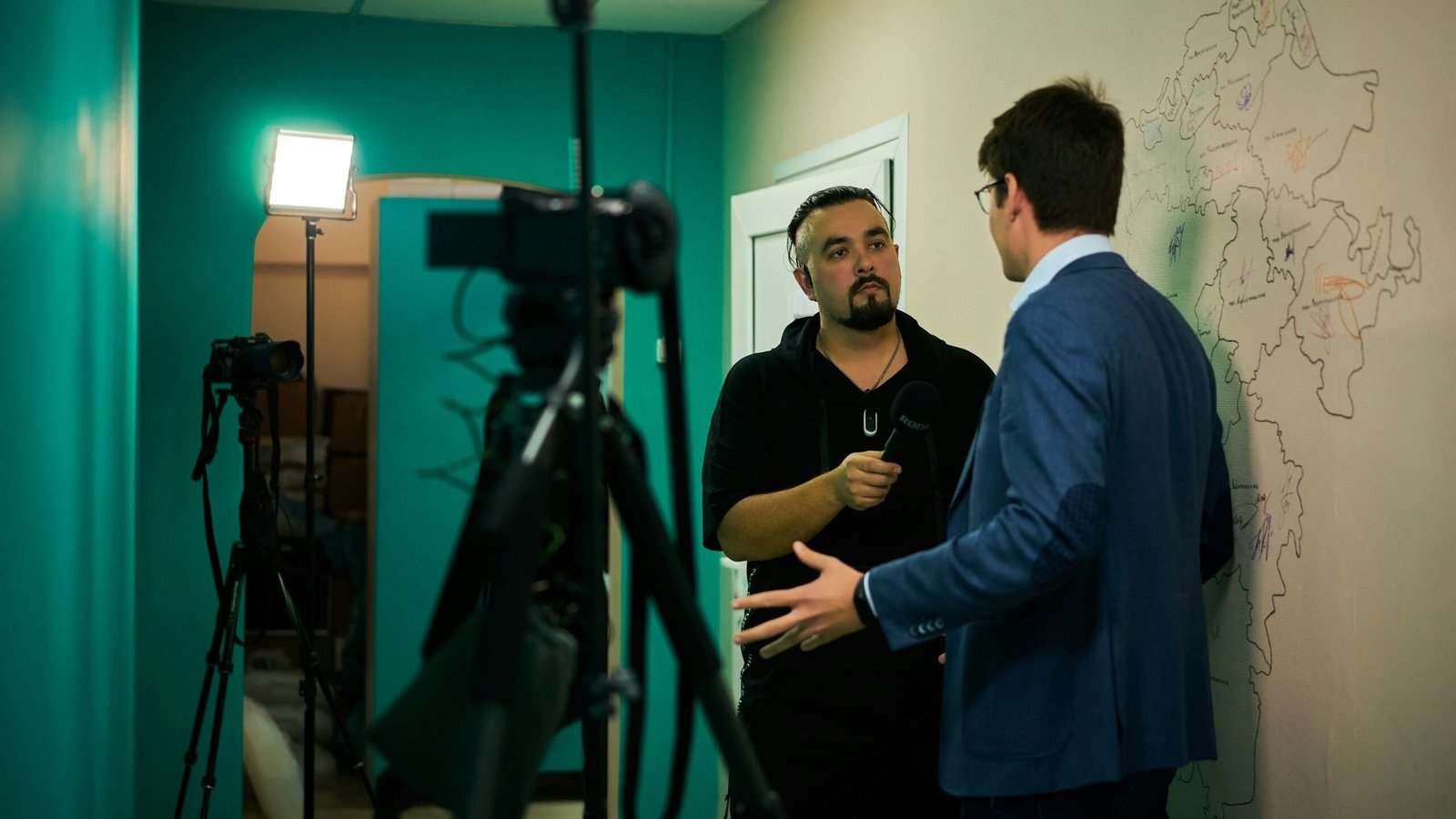
User interviews are one of the simplest, most powerful ways to learn what people actually need. The trick isn’t clever questions or long questionnaires: it’s asking fewer, clearer questions and listening with intent. Below is a practical guide you can use straight away: how to prepare, what to ask, what to avoid, and a short ready-to-use interview script.
Why better questions matter
Bad questions give you polite answers that sound useful but don’t help you make decisions. Good questions reveal behaviour, motive and context – the things you can act on. Think of interviews as a way to watch how people think and act, not a test where they try to please you.
Before the interview: prepare with purpose
Start by writing down the one thing you must learn from this session. Keep that learning goal at the top of your guide. When you have a clear aim, every question should help you reach it.
Decide who to talk to. Don’t over-index on demographics: pick people who actually use or would reasonably use the product you’re testing. Aim for short sessions (30–45 minutes), and plan for 5–8 interviews to start. That’s enough to find common patterns.
Always ask permission to record and explain how you’ll use the notes. A simple line works: “Do you mind if I record this so I can focus on our conversation? I’ll only use the recording for research and delete it after analysis.”
Framing the conversation
Open with a quick warm-up. Give a one-line explanation of why you’re speaking and what you hope to learn, then let them speak about themselves in plain terms. People relax when they understand the purpose and that there are no right or wrong answers.
Examples of warm-up prompts:
- “Tell me about the last time you used X.”
- “How did you discover X?”
These get people into story-mode — stories are gold.
How to ask questions that work
The best questions are open, specific, and anchored to real behaviours or events.
Open questions invite stories: “Tell me about…” rather than “Do you like…?”
Specific questions limit guesswork: “Walk me through the last time you paid an invoice” rather than “How often do you pay invoices?”
Anchor to events: ask about the last time they did something, not what they imagine they would do.
Short, clear language wins. Avoid jargon, compound sentences, and hypotheticals (“If you could…”). Hypotheticals produce opinions; past behaviour produces facts.
Examples of poor vs better phrasing
- Poor: “Would you use this feature?”
Better: “When was the last time you had a problem this would solve? Tell me about that moment.” - Poor: “Do you think competitors are better?”
Better: “Have you used [competitor]? What did you like or dislike about that experience?” - Poor: “Is pricing important?”
Better: “What was your reaction when you first saw the price? What made you decide to buy or not buy?”
Use probes, not leading prompts
Probes are short follow-up prompts that ask for depth without steering the answer. Useful probes include:
- “Can you tell me more about that?”
- “What led up to that?”
- “Why was that important to you?”
Avoid adding your own assumptions into probes (don’t say “So you didn’t like X because of Y?”).
What to avoid
- Don’t ask double-barrelled questions (two things at once).
- Don’t ask yes/no questions as the main questions — they stop the story.
- Don’t defend your product if the interviewee is critical; be curious.
- Don’t promise features or commit to timelines during research calls.
Listening matters more than note-taking
Take tidy notes and capture quotes, but give most of your attention to listening. A short summary after the interview — 5–10 minutes of reflection while the conversation is fresh — will yield useful patterns.
How to close the interview
End by asking if there’s anything they think you should have asked. This often surfaces important context you missed. Thank them, and, if appropriate, ask if you can follow up with a quick clarification later.
Ready-to-use 12-question interview guide
- Quick warm-up: “Tell me about what you do and how you currently solve [problem area].”
- “When was the last time you looked for a solution to this? Walk me through what happened.”
- “What were the biggest frustrations in that experience?” (probe: “Why was that frustrating?”)
- “How do you decide which tools or services to try?” (probe: “What matters most?”)
- “Tell me about a time when something worked really well. What made it work?”
- “What do you do today that you wish was easier?”
- “Have you tried any alternatives? What did you like/dislike?”
- “What would make you switch from your current way of doing things?”
- “How much time/money does this cost you today?” (be specific)
- “How do you measure success in this area?”
- “If you could change one thing about this experience, what would it be?”
- Closing: “Is there anything I didn’t ask that I should know?” + consent to follow up.
After the interviews: turn findings into action
Look for patterns — repeated pain points, surprising workarounds, language users use to describe their needs. Convert those into hypotheses you can test. For example: “Users are misplacing invoices because they don’t receive a summary email” becomes “Create an invoice-summary email and measure whether fewer customers ask for reminders.”
A final note on humility
Good interviews are a practice in humility. You’re not there to sell or to prove a point. You’re there to find gaps between what you think people want and what they actually do. Treat every answer as a clue, not a validation.
Related Post: How to Turn Assumptions Into Testable Experiments